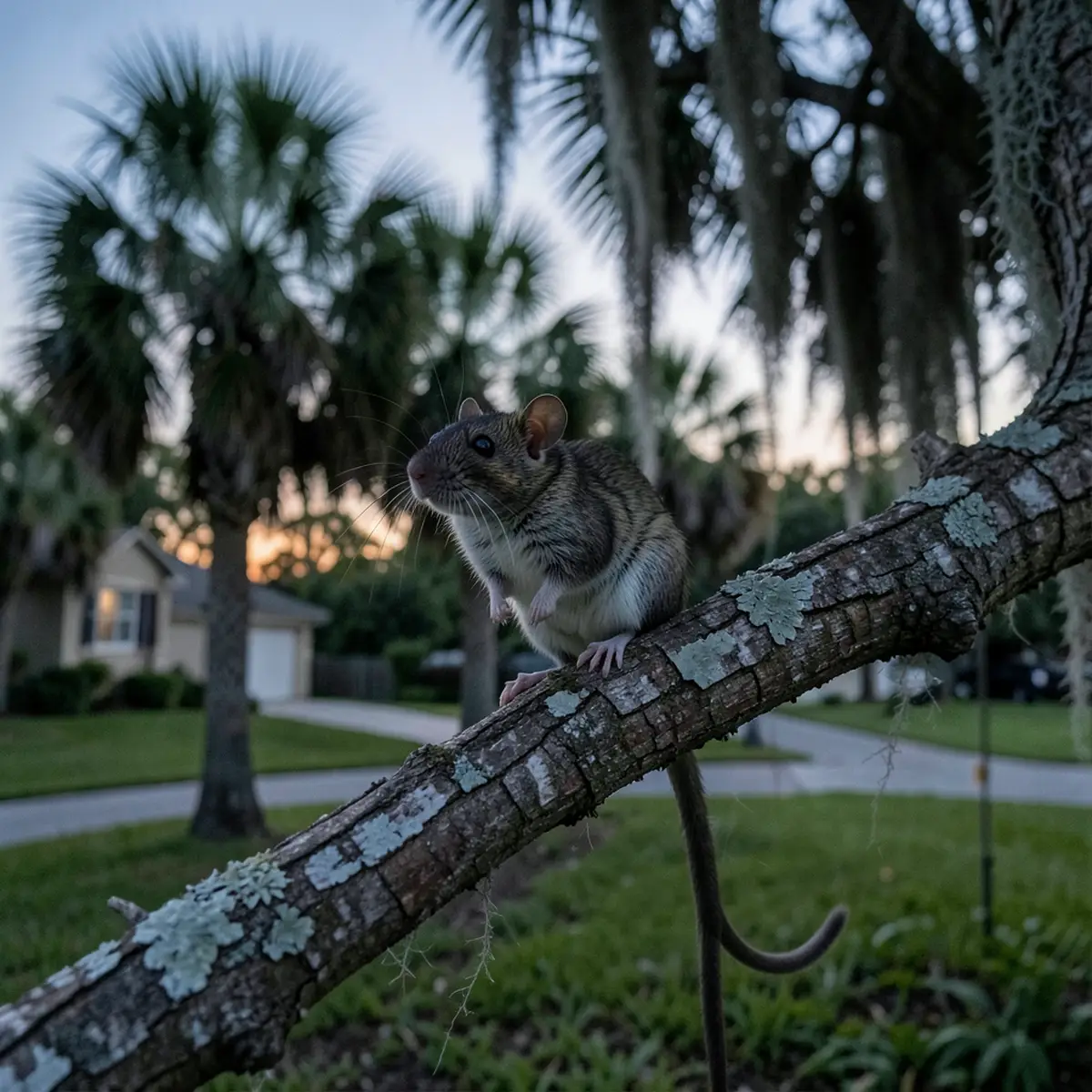
Roof rats are one of the most common, and most overlooked, household pests in Florida. Smaller and more agile than Norway rats, roof rats (Rattus rattus) are excellent climbers that love to nest in attics, soffits, and palm trees. If you live anywhere near canals, lakes, or dense vegetation, especially in canal-rich communities like Cape Coral, you’re in prime roof rat territory.
At Your Days Without Pests, we’ve spent more than 14 years helping homeowners across Fort Myers, Naples, and the rest of Southwest Florida deal with roof rats. The sooner you catch the signs, the easier (and less expensive) the solution. Here are five clear signs you may have roof rats in your Florida home.
Sign 1: Scratching or Scurrying Noises at Night
Roof rats are nocturnal, so the first sign most homeowners notice is sound: scratching, rustling, or scurrying coming from the attic, ceiling, or walls after dark. If you hear movement overhead when the house is quiet, especially around dusk or dawn, that’s a strong indicator something is moving around up there. Roof rats are light enough that the sounds can be subtle, often mistaken for a branch scraping the roof or the house settling.
In SWFL neighborhoods with heavy tree canopy, like parts of south Fort Myers, the McGregor Boulevard corridor, and older Naples communities near the beach, these sounds are especially common during fall and winter, when rats seek warmer indoor nesting sites. Don’t ignore noises that happen consistently at the same time each evening.
Sign 2: Droppings in the Attic or Along Baseboards
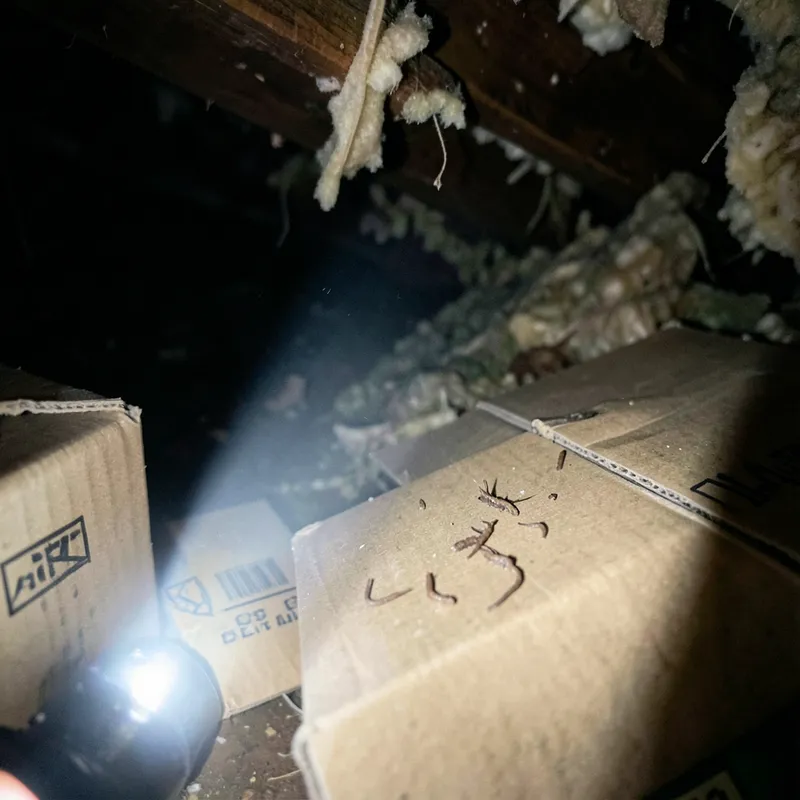
Roof rat droppings are small, dark, and spindle-shaped, roughly half an inch long with pointed ends. You’ll often find them concentrated in attics, near nesting sites, along baseboards, or inside cabinets and pantry shelves where food is stored. Fresh droppings are dark and shiny; older ones turn gray and crumble. Finding even a few is reason to investigate further.
Be careful not to confuse roof rat droppings with those of other pests. Mouse droppings are smaller (about a quarter inch) with pointed ends. Norway rat droppings are larger (about three-quarters of an inch) with blunt ends. Roof rat droppings fall right in the middle, about a half inch with tapered, pointed tips. If you’re unsure what you’re finding, a professional inspection can identify the species and scope of the problem.
Sign 3: Gnaw Marks on Wires, Wood, and Stored Items
Rats must gnaw constantly to keep their incisors from overgrowing. In an attic, that means electrical wiring, PVC pipes, wood beams, and cardboard storage boxes are all targets. Look for fresh gnaw marks: light-colored wood exposed beneath older paint, frayed wire insulation, or shredded paper and fabric used for nesting. Gnawed electrical wires are a serious fire hazard, so this sign alone is worth acting on immediately.
The National Pest Management Association reports that rodents are responsible for an estimated 20-25% of undetermined fires in the United States, many caused by chewed wiring. In Southwest Florida’s warm climate, where roof rats stay active year-round, the risk is never seasonal. If you find gnaw marks, assume the infestation is established and call a professional right away.
Sign 4: Greasy Rub Marks Along Walls and Entry Points
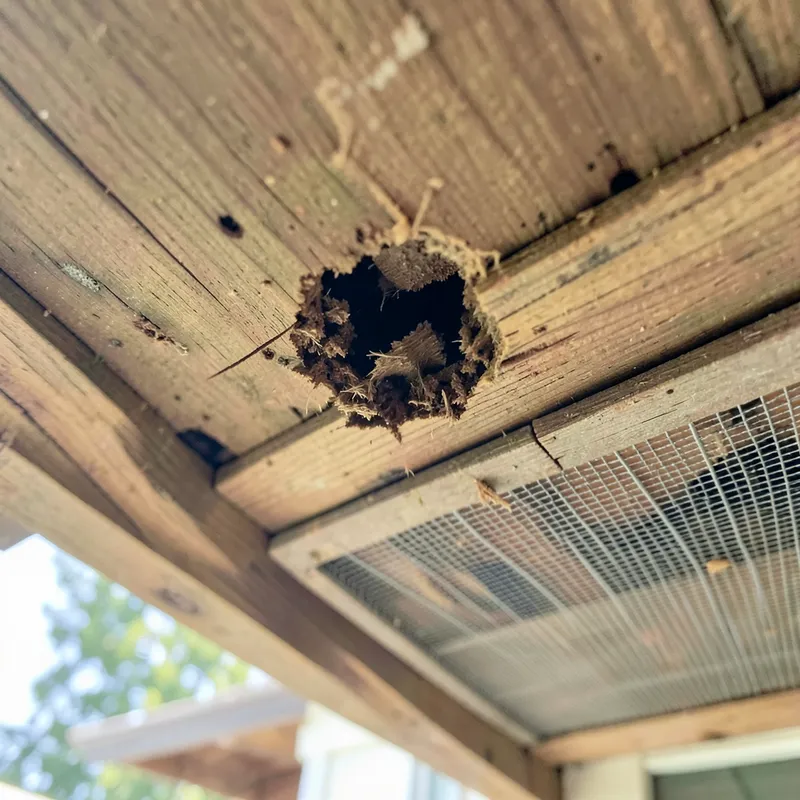
Roof rats follow the same paths repeatedly, and their fur leaves behind dark, greasy smudges along walls, pipes, and the edges of entry holes. These rub marks, sometimes called “rat rubs”, are most visible around soffit gaps, attic access points, and where pipes enter the home. If you see dark streaks in places they shouldn’t be, it’s a sign rats are using that path regularly.
These rub marks are particularly useful for identifying high-traffic areas and entry points, which is critical information for effective exclusion work. When we perform rodent removal, we use these trails to map out exactly where rats are entering and traveling, which allows us to seal those entry points precisely.
Sign 5: Nests or Shredded Nesting Material
Roof rats build loose, ball-shaped nests out of shredded paper, insulation, fabric, leaves, and any soft material they can find. In Florida homes, these nests often show up in attics, behind boxes in storage areas, or inside seldom-disturbed corners of the garage. If you find a pile of shredded material that wasn’t there before, don’t ignore it.
Roof rats in SWFL also take advantage of palm fronds, particularly Washingtonia and queen palms, to build outdoor nests. If you notice accumulated palm debris in your yard or see rats traveling along utility lines near palm trees, it’s only a matter of time before they find a way inside. Trimming palms and removing dead fronds reduces this attractive nesting habitat.
What to Do If You Spot These Signs
If you’ve noticed one or more of these signs, take action rather than hoping the problem resolves itself. Roof rats reproduce quickly (a single pair can produce dozens of offspring in a year), and a small issue can become a major infestation in weeks. Here’s what we recommend:
Inspect Your Roof and Soffits
Roof rats enter through gaps as small as a half-inch. Check vents, soffit screens, and where pipes or wires enter the attic. In older SWFL homes, deteriorated soffit panels and unsealed plumbing stacks are among the most common entry points.
Trim Trees and Palms Away From the Roof
Overhanging branches are the most common “highway” roof rats use to reach your attic. Keep all trees and palms trimmed at least 6 feet from the roofline. This single step dramatically reduces access.
Secure Food Sources
Store pantry food in sealed containers, clean up fallen fruit from yard trees (especially citrus, which roof rats love), and keep pet food indoors overnight. Bird feeders near the home can also attract rats. Consider relocating them farther from the house.
Call a Professional
Trapping and exclusion require the right techniques and equipment. A licensed rodent removal service removes the animals and seals entry points so they don’t return. DIY trapping rarely addresses the full scope of the problem.
From the Field: Ignacio Gomez on Roof Rats in SWFL
Roof rats are probably the pest I deal with most frequently in canal communities across Cape Coral and Lehigh Acres. These rats are incredible climbers. I’ve found them in attics three stories up, having traveled up a palm tree and onto the roof. The calls always spike in the fall, when the evenings cool down just enough that rats start looking for a warmer place to nest.
What concerns me most is the wiring damage. I can’t count the number of times I’ve found chewed electrical wires in an attic that the homeowner had no idea about. It’s a hidden fire hazard that most people never think about until they find the rats. When I do a rodent inspection, I always check the wiring, and I always seal the entry points. Trapping alone isn’t enough. If you don’t close the door behind them, they’ll come right back.
Ignacio Gomez, Owner & Lead Technician, Your Days Without Pests LLC
Frequently Asked Questions About Roof Rats in Florida
Are roof rats dangerous to humans?
Roof rats can carry diseases including leptospirosis, salmonellosis, and rat-bite fever, though direct transmission to humans is rare. The bigger danger is structural: they gnaw on electrical wiring (creating fire hazards), destroy insulation, and contaminate stored food with urine and droppings. A roof rat infestation should always be taken seriously and addressed promptly.
What time of year are roof rats most active in Southwest Florida?
Roof rats are active year-round in SWFL’s warm climate, but calls spike from October through January, when cooler evenings drive them indoors to nest. They’re also more visible during the rainy season, when flooding displaces them from outdoor nesting sites. For seasonal pest patterns, see our post on the Florida rainy season pest surge.
Can I get rid of roof rats on my own?
Trapping a single rat is possible, but eliminating an infestation requires finding and sealing every entry point, and there may be several you haven’t identified. Professional rodent removal includes thorough inspection, strategic trapping, exclusion (sealing entry points), and sanitation of contaminated areas. For a problem that can escalate this quickly, professional help is the most reliable path to a permanent solution.
Don’t Let Roof Rats Take Over Your Attic
Your Days Without Pests LLC is a veteran- and family-owned pest control company based in Lehigh Acres, serving all of Southwest Florida. We’re licensed, insured, and experienced in identifying and eliminating roof rat infestations before they cause structural or electrical damage to your home.
Call us at (239) 810-8762 for a free inspection. We’ll find where the rats are getting in, remove them, and seal your home so they stay out for good.