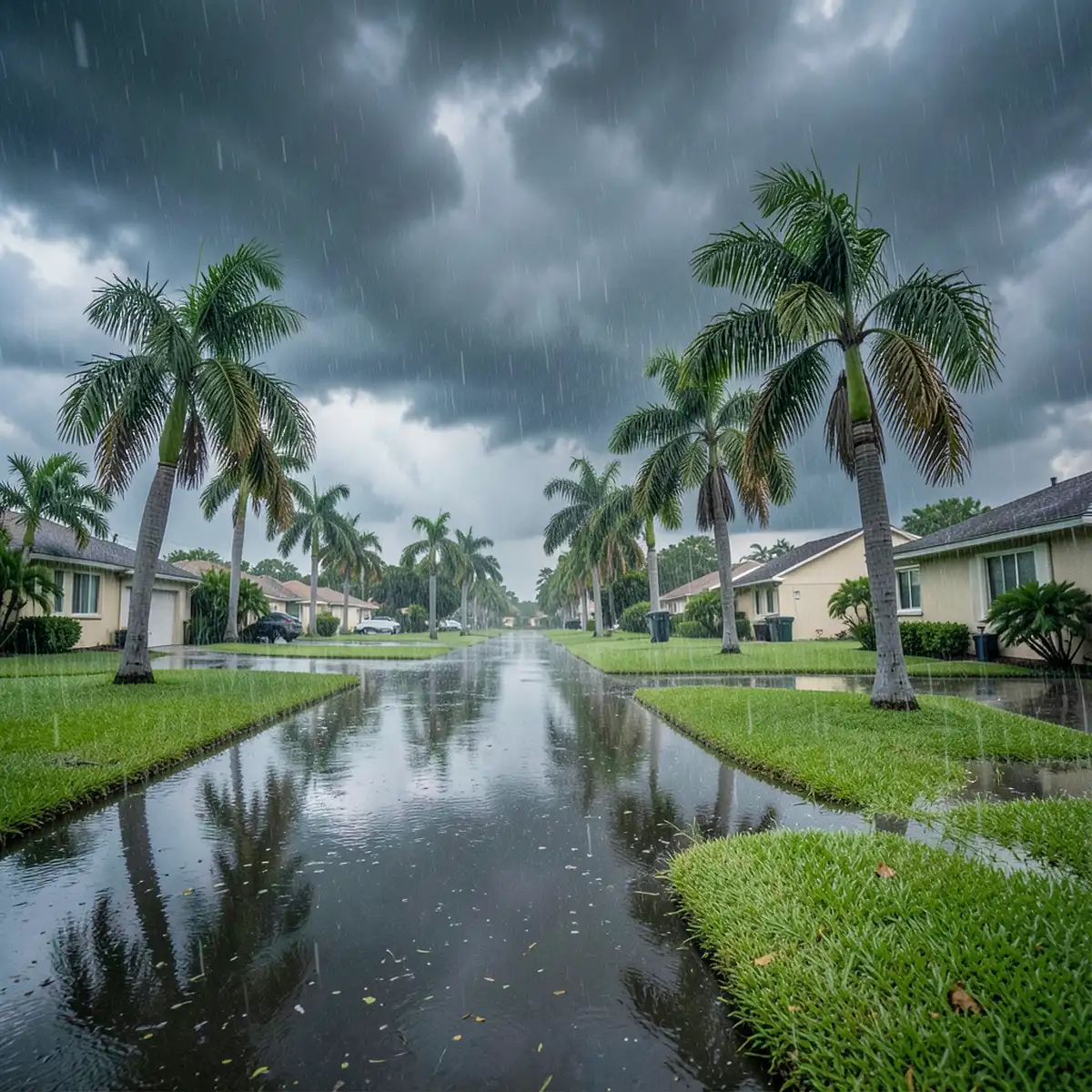
Southwest Florida’s rainy season runs roughly from May through October, and if you live in Fort Myers, Naples, or Cape Coral, you already know the drill: afternoon thunderstorms, heavy downpours, and a sudden explosion of bugs. Ants march indoors to escape the rain, mosquitoes breed in standing water, and palmetto bugs seem to appear out of nowhere.
The Florida rainy season pest surge is one of the most predictable and most frustrating events SWFL homeowners face each year. With 14+ years of experience protecting homes across Lee, Collier, and surrounding counties, our team at Your Days Without Pests has seen firsthand how fast a small pest problem turns into a major infestation once the rains arrive. Here’s what’s happening, why, and what you can do about it.
Why Does Rain Cause a Pest Surge in Southwest Florida?
When heavy rains saturate the ground, many pests lose their natural nesting sites. Fire ant colonies flood, forcing workers to relocate. Ghost ants and other sweet-feeding ants stream into kitchens looking for dry ground and food. Subterranean termites, which are already a year-round threat in inland communities like Lehigh Acres, LaBelle, and Clewiston, become more active as moisture softens the soil they tunnel through.
Outdoors, mosquitoes take full advantage. A single bottle cap of standing water is enough for a female Aedes aegypti or Aedes albopictus mosquito to lay hundreds of eggs. After a typical SWFL downpour, clogged gutters, flower pot saucers, tarps, and kids’ toys become instant breeding grounds. Within a week, a quiet backyard can feel unbearable.
The connection between rain and pests isn’t just anecdotal. Researchers at the University of Florida’s IFAS Extension have documented that ant and cockroach complaint calls spike significantly during the rainy months across Lee and Collier counties. When groundwater rises, pests that normally live in soil or mulch are forced upward and outward, straight toward your home’s foundation, plumbing penetrations, and weep holes.
Which Pests Surge During Florida’s Rainy Season?
Not every pest reacts the same way to rain, but several species become noticeably more active, and more visible, once the wet season arrives. Here are the top offenders SWFL homeowners should watch for:
Mosquitoes
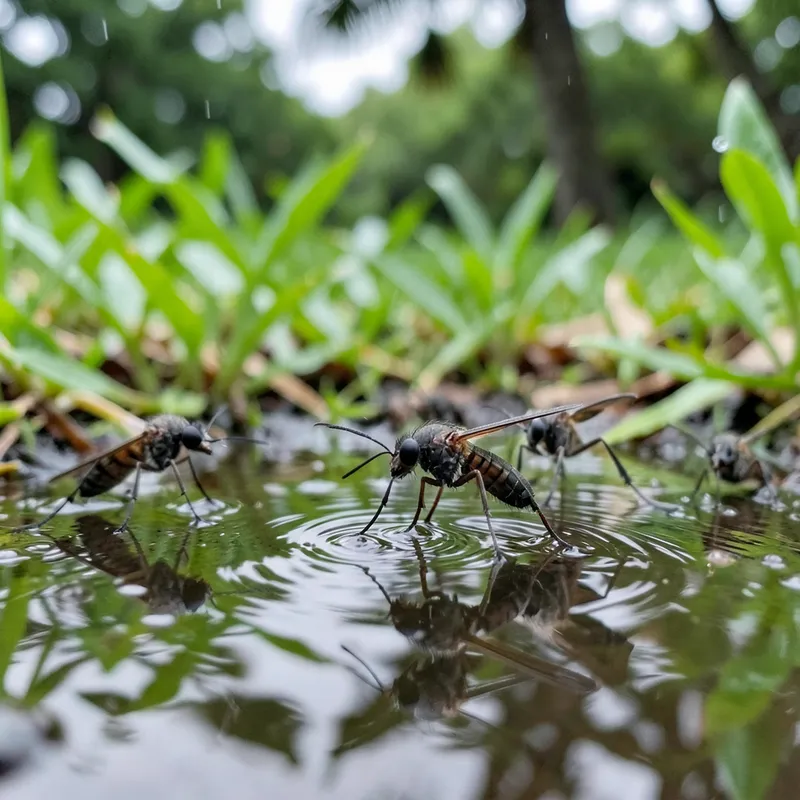
Peak activity runs May through October. Aedes aegypti and Culex quinquefasciatus are the most common disease-carrying species in our area. They’re worst at dawn and dusk, and anywhere standing water collects, including canal-front properties in Cape Coral and low-lying lots in Lehigh Acres.
Ghost Ants
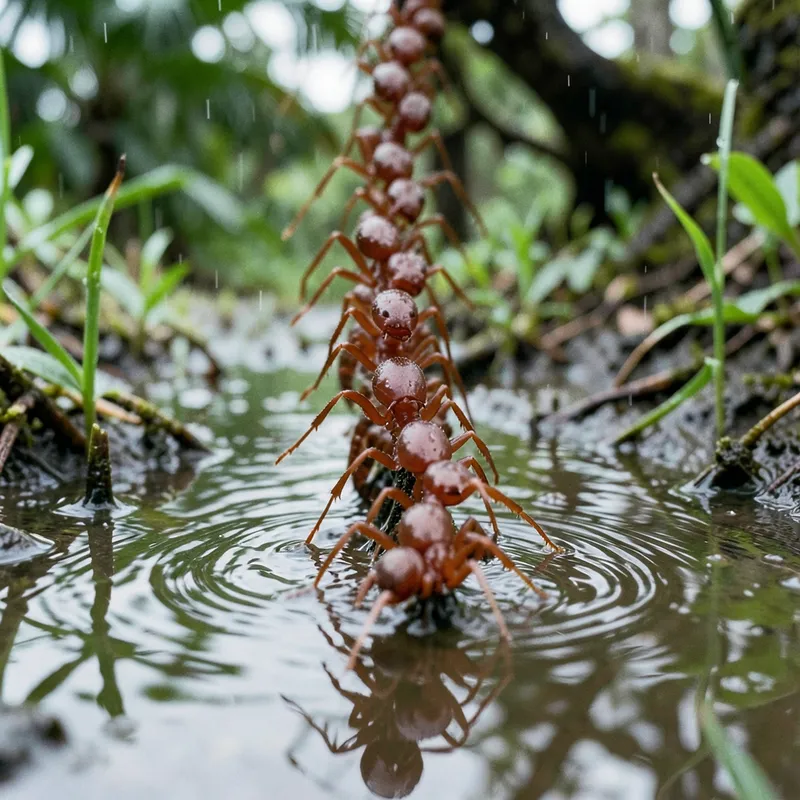
South Florida’s most common kitchen invader. Tapinoma melanocephalum trails indoors in long, thin lines seeking sweets and water. During heavy rains, entire colonies relocate indoors, often into wall voids, behind baseboards, and around kitchen plumbing. Once established, they’re notoriously difficult to eliminate without professional treatment.
Fire Ants
After heavy rain, Solenopsis invicta mounds pop up overnight in lawns and along driveways. When their ground nests flood, workers form floating rafts that can travel surprising distances, sometimes right onto your porch or patio. Their stings are painful and can be dangerous for kids and pets.
Palmetto Bugs (American Cockroaches)
Large and startling, Periplaneta americana slips indoors through weep holes, drains, and gaps under doors when their outdoor harborage floods. These aren’t a sign of poor housekeeping. They’re attracted to moisture, and rainy season makes them bold about entering homes in Fort Myers, Bonita Springs, and Estero.
Subterranean Termites
Swarm season overlaps with spring and early summer rains, when winged reproductives of Reticulitermes flavipes (the eastern subterranean termite) emerge to start new colonies. These swarmers are often mistaken for flying ants, but they signal an active colony nearby. Learn more about protecting your home on our termite control page.
How Can SWFL Homeowners Reduce the Rainy Season Pest Surge?
You can’t stop the rain, but you can make your home far less inviting to the pests that ride along with it. A few simple steps go a long way:
Empty Standing Water Weekly
Check plant saucers, birdbaths, clogged gutters, kids’ toys, and tarps. Dump anything that holds water for more than a couple of days. This single habit disrupts the mosquito breeding cycle more effectively than any other action.
Trim Vegetation Back from the House
Shrubs and branches that touch the siding create a “bridge” that ants and roaches use to reach entry points. Keep a minimum 12-inch clearance between foliage and your exterior walls.
Seal Cracks and Gaps
Pay attention to door sweeps, weather stripping, weep holes, and gaps around plumbing and A/C lines. Even small openings give palmetto bugs and ghost ants all the access they need.
Keep Kitchen Surfaces Clean
Ghost ants are tiny and relentless. Wipe up spills, store food in sealed containers, and don’t leave pet food out overnight. A crumb on the counter is a feast for a ghost ant colony.
Schedule Pre-Season Professional Treatment
A professional barrier application applied in late spring, before peak rains, dramatically reduces indoor ant and roach activity all summer. Our residential pest control plans are designed specifically for SWFL’s climate and seasonal pressure.
Don’t Wait Until the Infestation Is Obvious
One of the biggest mistakes we see is homeowners waiting until they see a trail of ants or a roach in the kitchen before calling. By that point, the colony is usually well-established. Preventive, quarterly service keeps a protective barrier around your home and intercepts pests before they become a problem, especially during the months when pressure is highest. For more on why ongoing service works better than one-time treatments, see our post on why quarterly pest control makes sense in Southwest Florida.
Whether you live in a canal-front home in Cape Coral, a gated community in Naples, or a growing neighborhood in Fort Myers, the rainy season affects everyone. The good news is that a consistent plan makes a dramatic difference.
From the Field: Ignacio Gomez on Rainy Season Pest Pressure
I’ve been treating homes in Southwest Florida for over 14 years, and I can almost set my watch by it. Once that first week of heavy afternoon rains hits in May, the calls start flooding in. Literally. Ants trailing across kitchen counters, palmetto bugs showing up in bathrooms, mosquito clouds over the backyard. The pattern is the same whether I’m in a waterfront condo in Cape Coral or a single-family home in Lehigh Acres.
What most homeowners don’t realize is that the pests were already there. The rain just pushes them toward your house. A proper perimeter treatment applied before the rainy season kicks into gear makes all the difference. I’d rather treat your home proactively than get the emergency call after the ants have already moved in. That’s exactly why we built our quarterly plans around SWFL’s seasonal cycles. It’s not a one-size-fits-all approach.
Ignacio Gomez, Owner & Lead Technician, Your Days Without Pests LLC
Frequently Asked Questions About Florida Rainy Season Pests
How long does rainy season pest surge last in Southwest Florida?
SWFL’s rainy season typically runs from May through October, but pest pressure often remains elevated through November as standing water lingers and temperatures stay warm. The worst surge usually peaks in June through August, when rainfall is heaviest and temperatures are highest. A consistent pest management plan keeps your home protected throughout the entire stretch.
Are the pests that come indoors during rain dangerous?
Most rainy season invaders, like ghost ants and palmetto bugs, are more of a nuisance than a health threat. However, fire ants deliver painful stings that can cause allergic reactions, and mosquitoes can transmit diseases like West Nile virus and dengue fever. Subterranean termite swarmers don’t bite, but their presence signals a colony that could be causing structural damage. Any pest intrusion warrants attention, but termites and fire ants should be addressed immediately.
Can I handle rainy season pest problems on my own?
DIY products can provide temporary relief for a few ants or a single roach, but they rarely address the colony that’s sending them. During rainy season, the source colony is often outside your home, and sometimes under your slab. Professional perimeter treatments target the colony, not just the scouts you see inside. For persistent problems like ghost ants and subterranean termites, professional treatment is strongly recommended.
Get Ahead of the Rainy Season Pest Surge
Your Days Without Pests LLC is a veteran- and family-owned pest control company based in Lehigh Acres and serving all of Southwest Florida. We’re licensed, insured, and have spent more than 14 years helping homeowners stay ahead of seasonal pest pressure. Don’t let the rainy season catch you off guard.
Call us at (239) 810-8762 for a free inspection, and we’ll build a plan that keeps your home protected all season long.